
Not All Aluminum Is Created Equal: A Fabricator's Guide to 6061, 5052, and 3003
Posted by Banditos Incorporated on 2026 Jun 22nd
The three alloys every fab shop reaches for, what each one is good at, and where it will let you down at the weld.
When it comes to fabrication, aluminum isn't just a lightweight alternative to steel. It's a distinct powerhouse with its own set of rules. Choosing the right grade can mean the difference between a seamless weld and a structural failure.
Here's a breakdown of the three heavy hitters in the fabrication shop, and where each one earns its place on the rack.
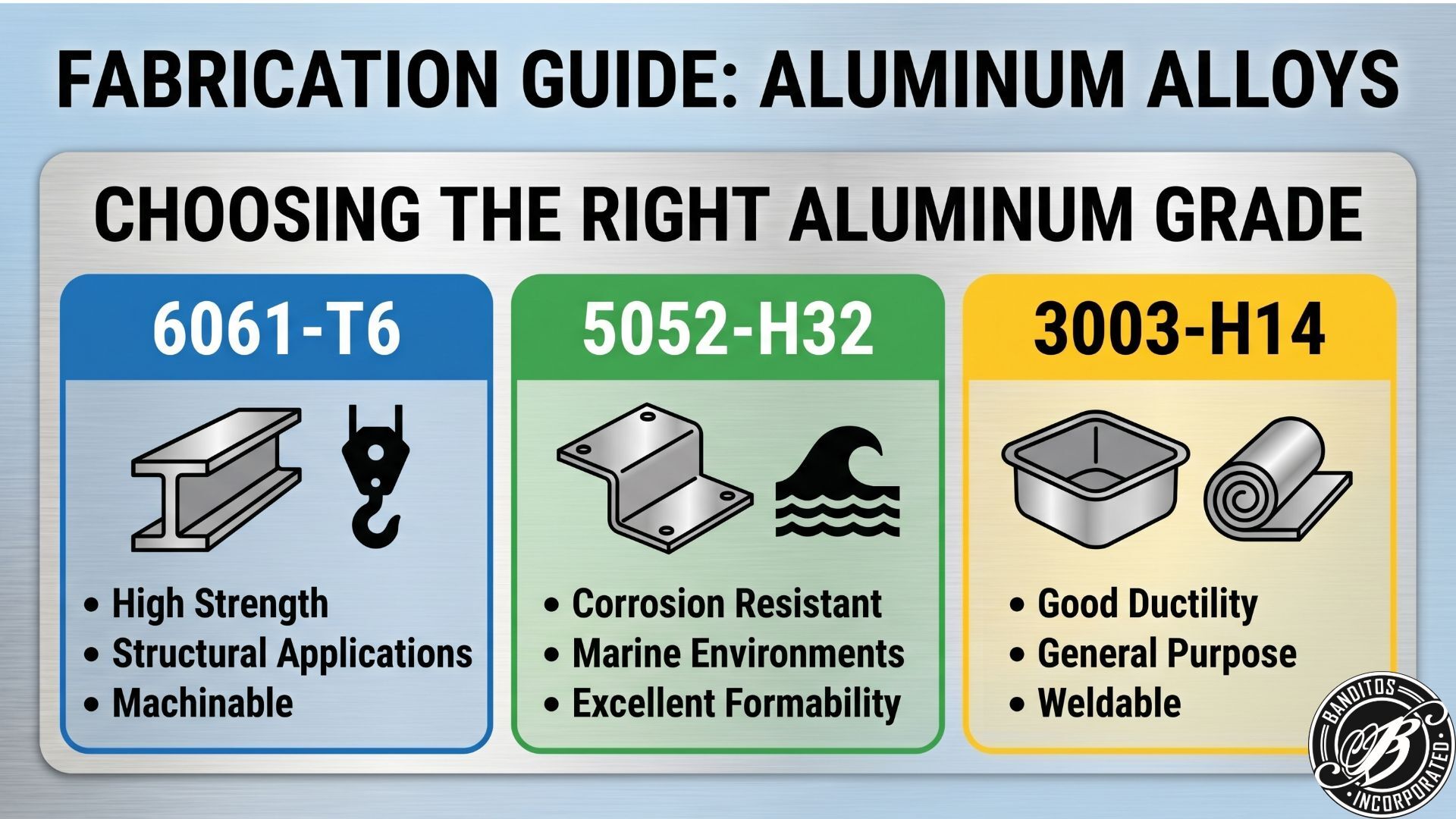
1. 6061-T6: The Structural Workhorse
This is the most versatile alloy in the rack. Known for its excellent strength-to-weight ratio and structural integrity, it's the go-to for frames, bridges, and heavy-duty components.
Strengths: Highly machinable with great corrosion resistance.
Watch-outs: It's sensitive to heat. Welding can significantly reduce the strength of the material near the joint (the Heat Affected Zone), often requiring post-weld heat treatment to restore it.
2. 5052-H32: The Formability King
If you're working with sheet metal that requires intricate bends, 5052 is likely your best bet. It's widely used in marine environments and electronic enclosures.
Strengths: Exceptional resistance to saltwater and high fatigue strength. It's more forgiving during bending than 6061.
Watch-outs: It's non-heat-treatable and generally has lower overall strength than the 6-series.
3. 3003-H14: The General-Purpose Choice
Frequently used for chemical equipment and general sheet metal work, this alloy is essentially pure aluminum with added manganese.
Strengths: Incredible weldability and high ductility. It's cost-effective for parts that don't require extreme strength.
Watch-outs: Very low structural strength. It's great for a fuel tank or a decorative panel, but don't reach for it on a load-bearing frame.
The Aluminum Challenge
Regardless of the grade, aluminum brings two problems to every weld: high thermal conductivity, and a stubborn oxide layer that melts at roughly three times the temperature of the metal underneath it. That combination is why aluminum punishes sloppy technique. Precision and cleanliness aren't suggestions here. They're requirements.
It's also why your power source and your filler matter more on aluminum than almost anywhere else. Consistent arc starts, tight pulse control, and the heat management to push through that oxide layer without blowing through the base metal are the difference between a clean bead and a scrapped part. Match your filler to the job too: browse aluminum welding wire to pair the right alloy with your grade.
Weld It Right with the Right Machine
Banditos is an authorized Canada-wide Fronius dealer, and Fronius power sources are built for exactly this kind of work, with the arc control and pulse processes that make aluminum behave. Their Cold Metal Transfer (CMT) process in particular runs with dramatically reduced heat input, which is exactly what you want when you're trying to protect the Heat Affected Zone on a grade like 6061. Browse the full lineup on our Fronius brand page and spec the machine that matches your shop. Blue Collar Superstore. Built for the people doing the work.