
304 vs 316 vs 400 Series: How to Choose the Right Stainless Steel
Posted by Banditos Incorporated on 2026 Jun 30th
Choosing the right stainless steel isn't just a technical decision—it’s a business one. Selecting the wrong grade leads to premature corrosion, failed welds, and expensive rework. For anyone in fabrication or industrial sales, understanding these nuances is the difference between a satisfied client and a warranty nightmare.
Here is the breakdown of the "Big Three" you’ll encounter on the shop floor:
1. The Workhorse: Grade 304 If you aren't sure which one to use, it's probably 304. It’s the gold standard for versatility. It’s easy to form, easy to weld, and offers excellent corrosion resistance for most indoor or mild outdoor environments.
✅ Best Suited For: Kitchen equipment, architectural accents, and general industrial piping.
2. The Marine Grade: Grade 316 This is where the environment dictates the budget. 316 contains molybdenum, which makes it a beast against chlorides (salt) and harsh chemicals. If the project is near the coast or in a processing plant, 304 will tea-stain and fail; 316 will hold the line.
✅ Best Suited For: Marine hardware, chemical processing, and pharmaceutical labs.
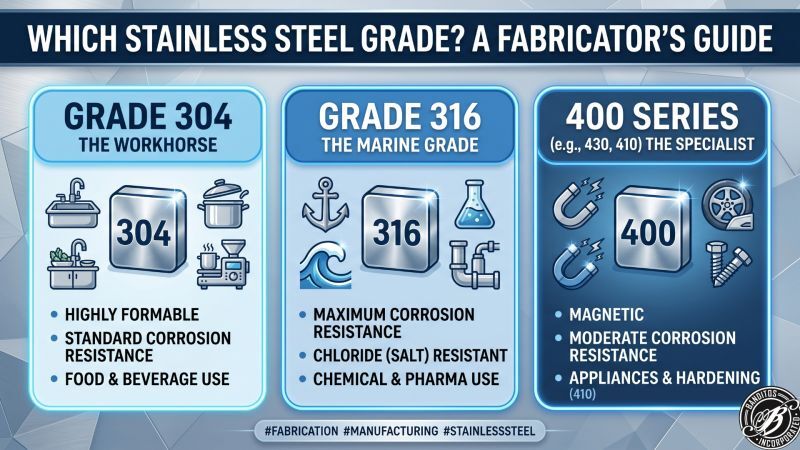
3. The Specialist: 400 Series (410/430) While the 300 series is non-magnetic, these are magnetic. They generally trade some corrosion resistance for higher hardness or lower cost.
430 is great for aesthetics and "dry" appliances where cost is a factor.
410 can be heat-treated for incredible strength.
✅ Best Suited For: Appliance panels, automotive trim, and high-strength fasteners.
The Bottom Line: Don't over-spec if you don't have to, but never under-spec for a harsh environment. Saving 15% on material today isn't worth a 100% replacement cost next year.